5 min read
From product selection to purchase, UX is what makes people believe
How UX, clarity, and curation shape trust in modern e-commerce
And how UX actually drives revenue
Published:
March 13, 2026

Mark Haedo Martinez
Lead UX/UI Designer
Designing trust in e-commerce (from product selection to purchase)
In e-commerce, trust is not a feature.
It’s the product.
Especially in categories like beauty, wellness, or health, users are not just buying something.
They’re buying a decision.
What to put on their skin.
What to trust.
What to believe.
And most platforms get this wrong.
The real problem isn’t choice. It’s trust.
Most beauty e-commerce platforms don’t fail because of a lack of products.
They fail because users don’t trust what they see.
Too many options.
Too many claims.
Too little structure.
Everything looks credible.
Which means nothing really is.
Users scroll, compare, open multiple tabs.
They try to validate what they’re seeing instead of moving forward.
And that moment of hesitation is where experience breaks.
UX as a curation layer
In this context, UX is not just about navigation or layout.
It acts as a filter.
It decides:
what is shown
how it is structured
how it is understood
Good UX doesn’t just display products.
It reduces uncertainty.
It creates hierarchy.
It highlights what matters.
It removes noise.
Because in a world of infinite choice, clarity becomes the product.
Trust is built before the checkout
Most e-commerce thinking is focused on conversion.
Checkout optimization. CTA placement. Flow improvements.
But trust doesn’t start at checkout.
It starts much earlier.
In how products are introduced.
In how information is framed.
In how consistent the experience feels from one page to another.
If trust isn’t established before that point, no amount of optimization will fix it.
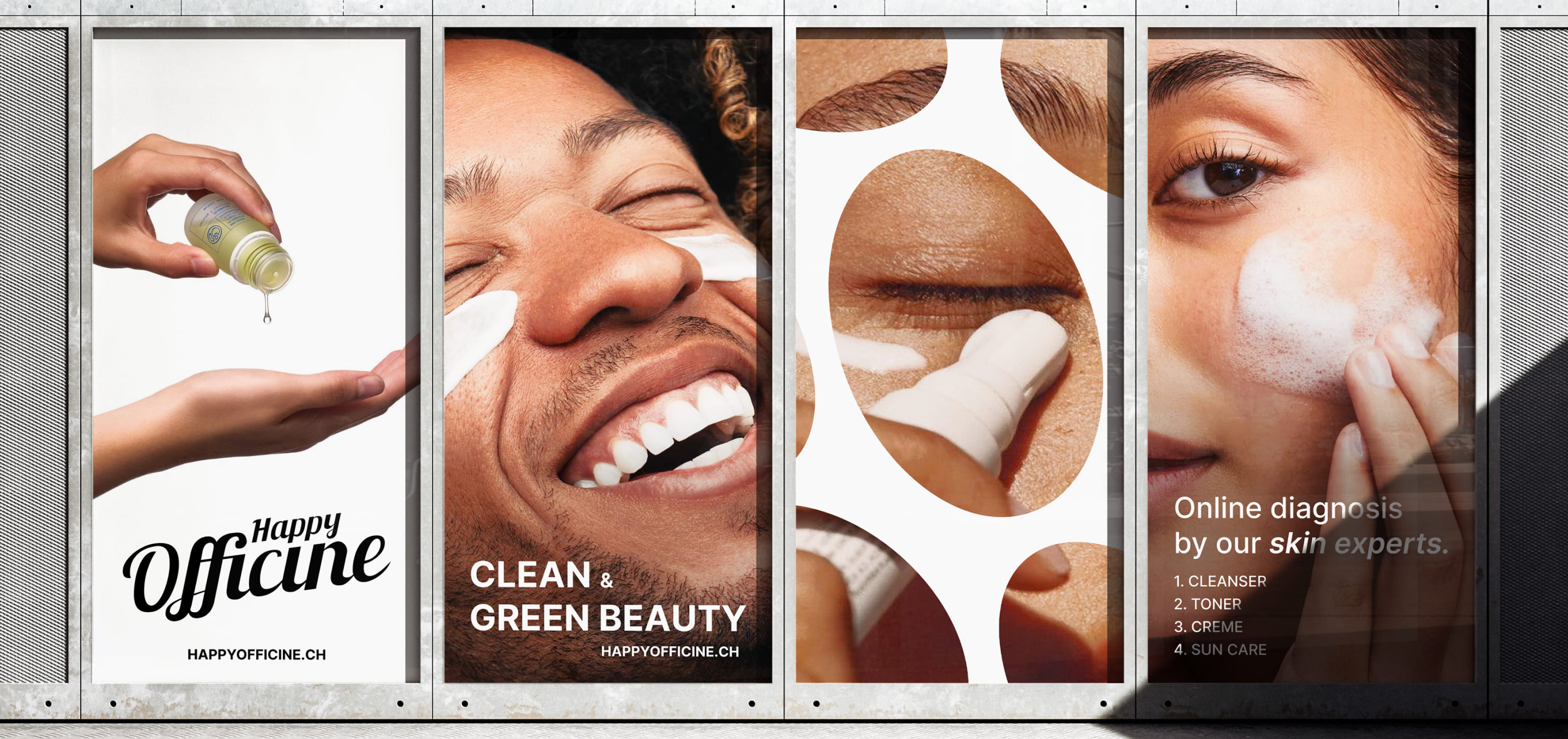
Case Study: Curating trust (Happy Officine)
With Happy Officine, the challenge wasn’t to sell more products.
It was to make users trust what they were seeing.
Positioned in the clean beauty space, the platform had to deal with a fundamental issue:
everyone claims to be “clean”.
From a user perspective, that creates noise.
Products start to feel interchangeable.
Claims lose meaning.
Trust becomes fragile.
What we focused on
Instead of building a traditional marketplace, we approached the experience as a curated system.
structuring product discovery around clarity, not volume
reinforcing the perception of selection, not accumulation
aligning visual language with credibility and simplicity
creating a consistent experience across browsing, product, and purchase
Every element was designed to reduce doubt.
Not by adding more information, but by making what matters more visible.
→ Explore the full case study: Happy Officine Case Study
From catalog to curation
Traditional e-commerce platforms operate like catalogs.
They show everything.
But in categories where trust matters, showing everything creates confusion.
The role of UX shifts.
From presenting products
to selecting them.
From navigation
to guidance.
From interface
to decision-making.
What actually builds trust
If trust is the goal, UX needs to be designed differently.
Not as a layer.
As a system.
That means:
Reduce what is shown.
More choice doesn’t create more value.
Structure information.
Users should understand before they compare.
Design consistency.
Trust grows when the experience feels predictable.
Make decisions easier.
The faster users understand, the more confident they feel.
One simple reality
Users don’t buy because something looks good.
They buy because it feels right.
And that feeling doesn’t come from design alone.
It comes from clarity.
Most e-commerce platforms try to show everything.
The ones that succeed know what not to show.