

Art Direction
Brand Refresh & Visual System
Visual Identity Campaign Direction Typography & Image Language
2026
Self-initiated · Lausanne
The Posture Problem.
Salt has the best network in Switzerland. And the commercial posture of a discounter.
A Tuesday morning, 7:42 AM. Platform 4, in Lausanne.
Four telecom posters lined up on the wall: Salt, Yallo, Wingo, Migros Mobile. From six meters away, you couldn't tell them apart. From two, only one element still held: Salt's wordmark, the only Superior serif in Swiss telecom. That's where the project started. Not from a problem with the brand, but from a question about what surrounded it. Promo bubbles. Italic prices. Burst stars. Discount layouts. Decades of campaigns had turned an editorial house into a supermarket aisle. This isn't a redesign. It's a return to what Salt was meant to be.
01
Concept & Art Direction
The poster becomes
a notification
Every Salt offer behaves like a notification, not a poster. One glass panel over a real Swiss moment, one green accent, the serif wordmark signing off. A system, not a season. The same card anatomy across every plan. Only the life behind the glass changes.
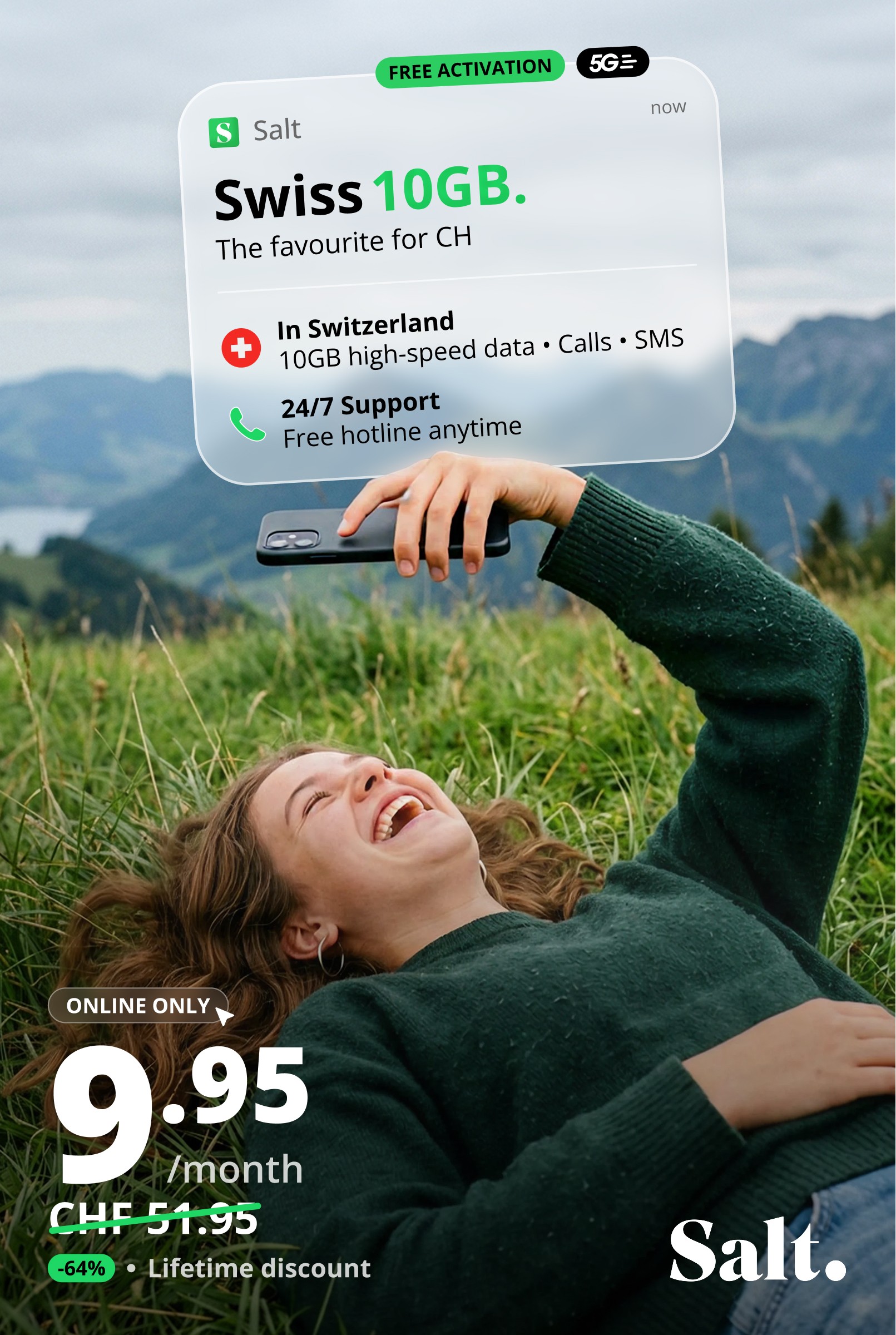
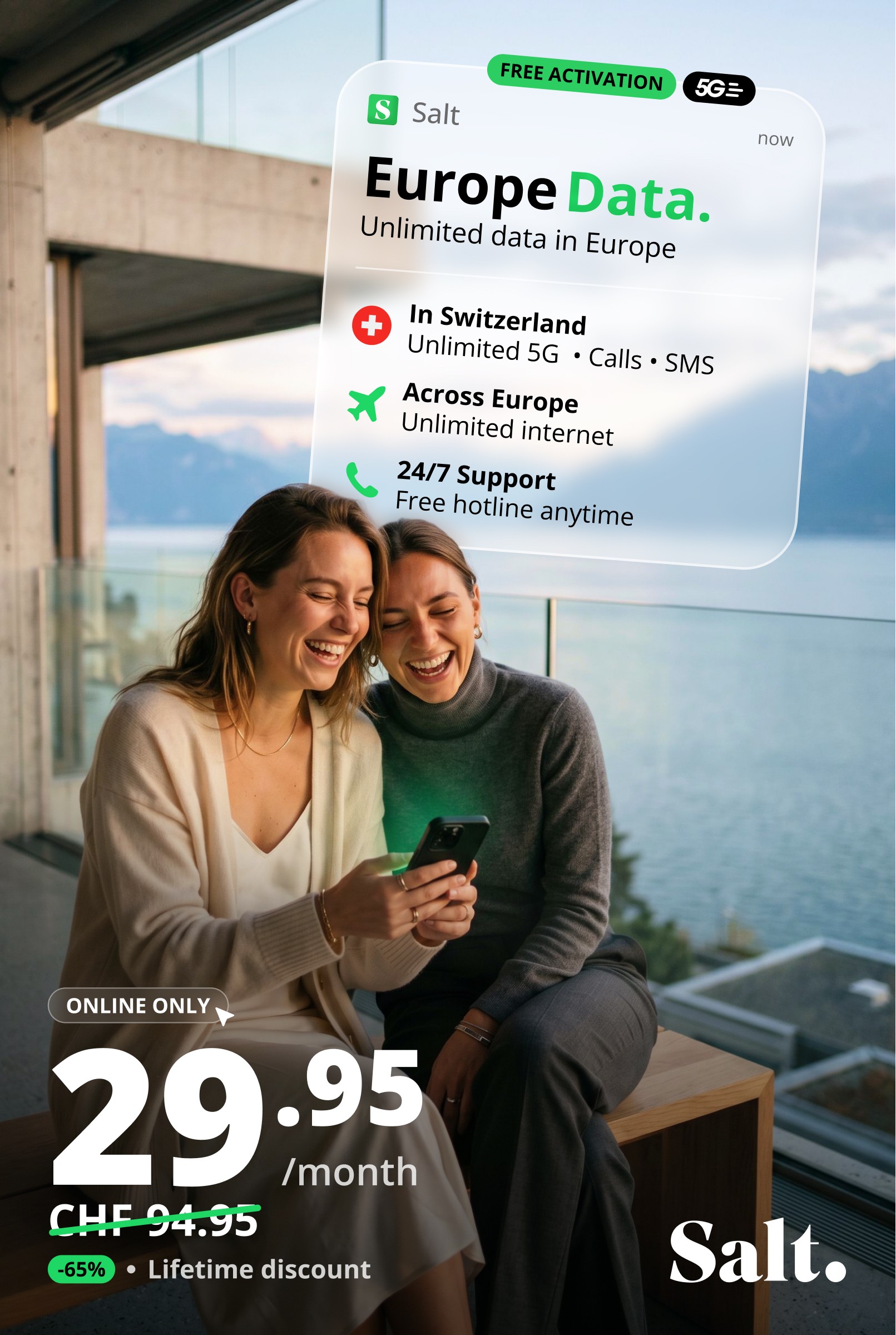
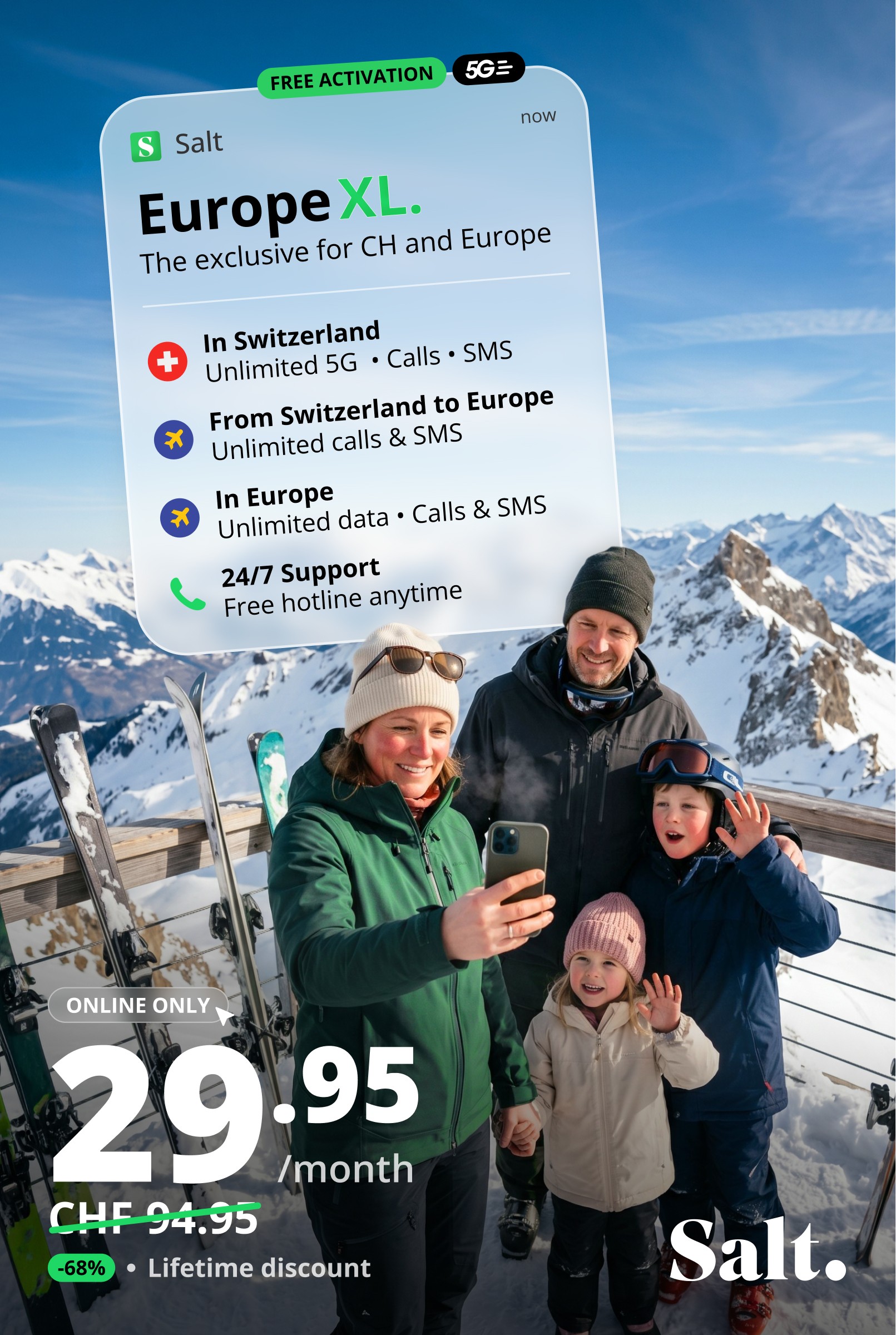
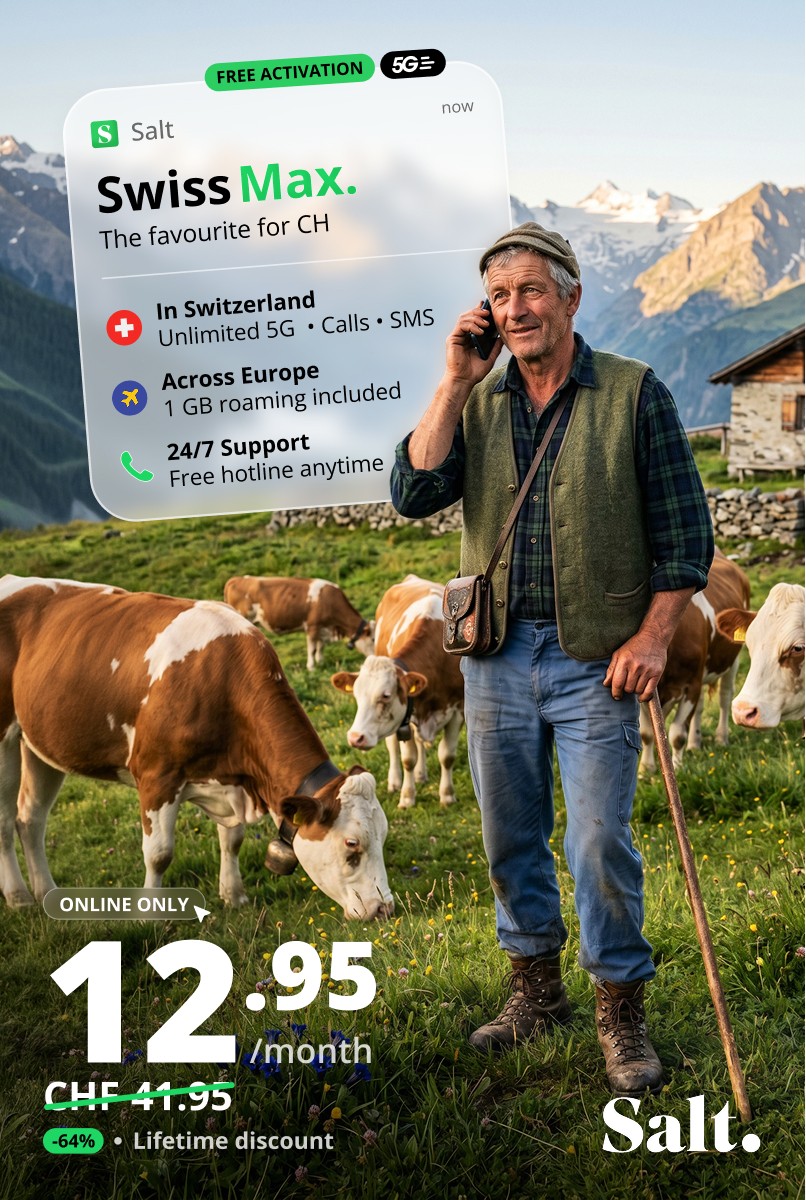
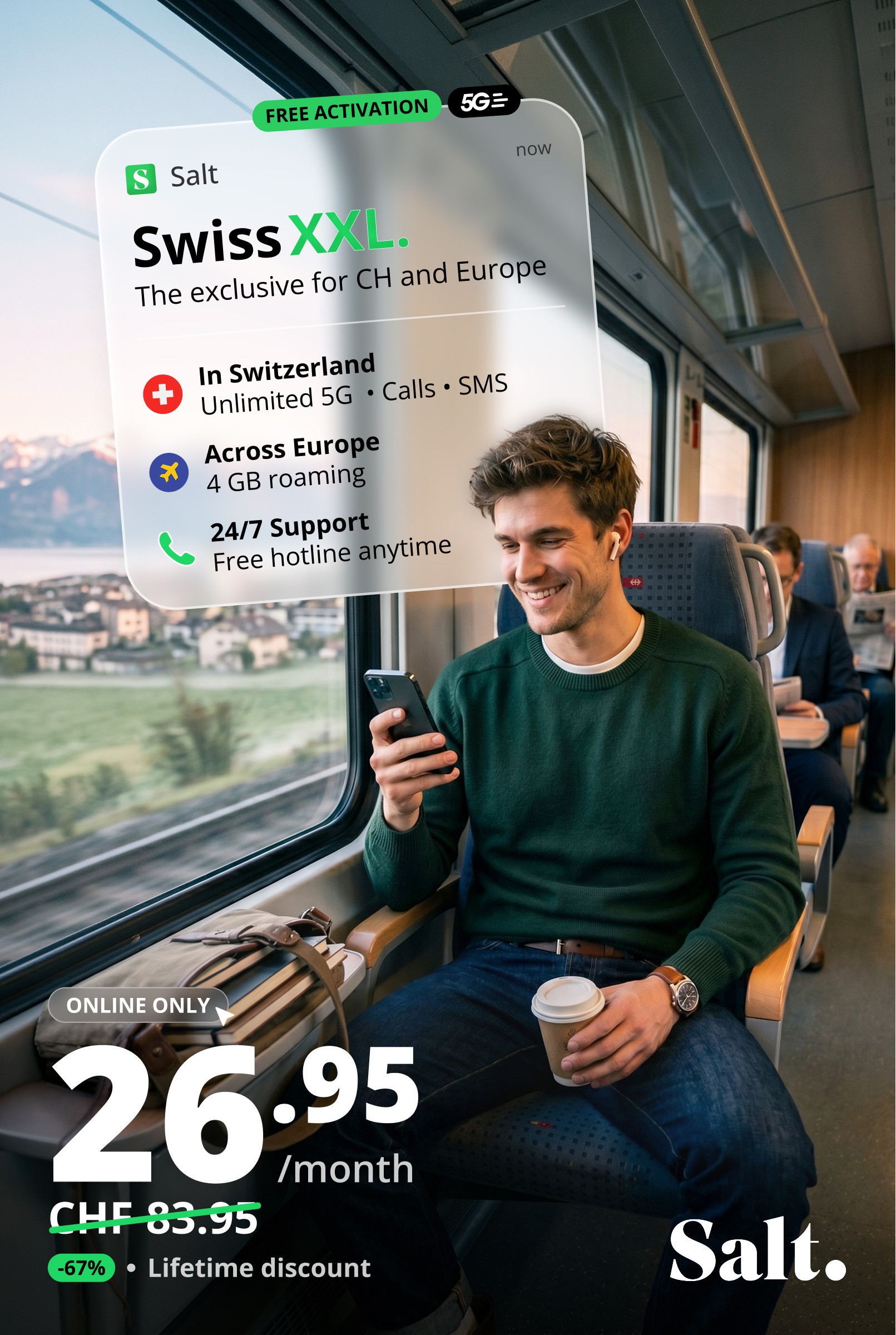
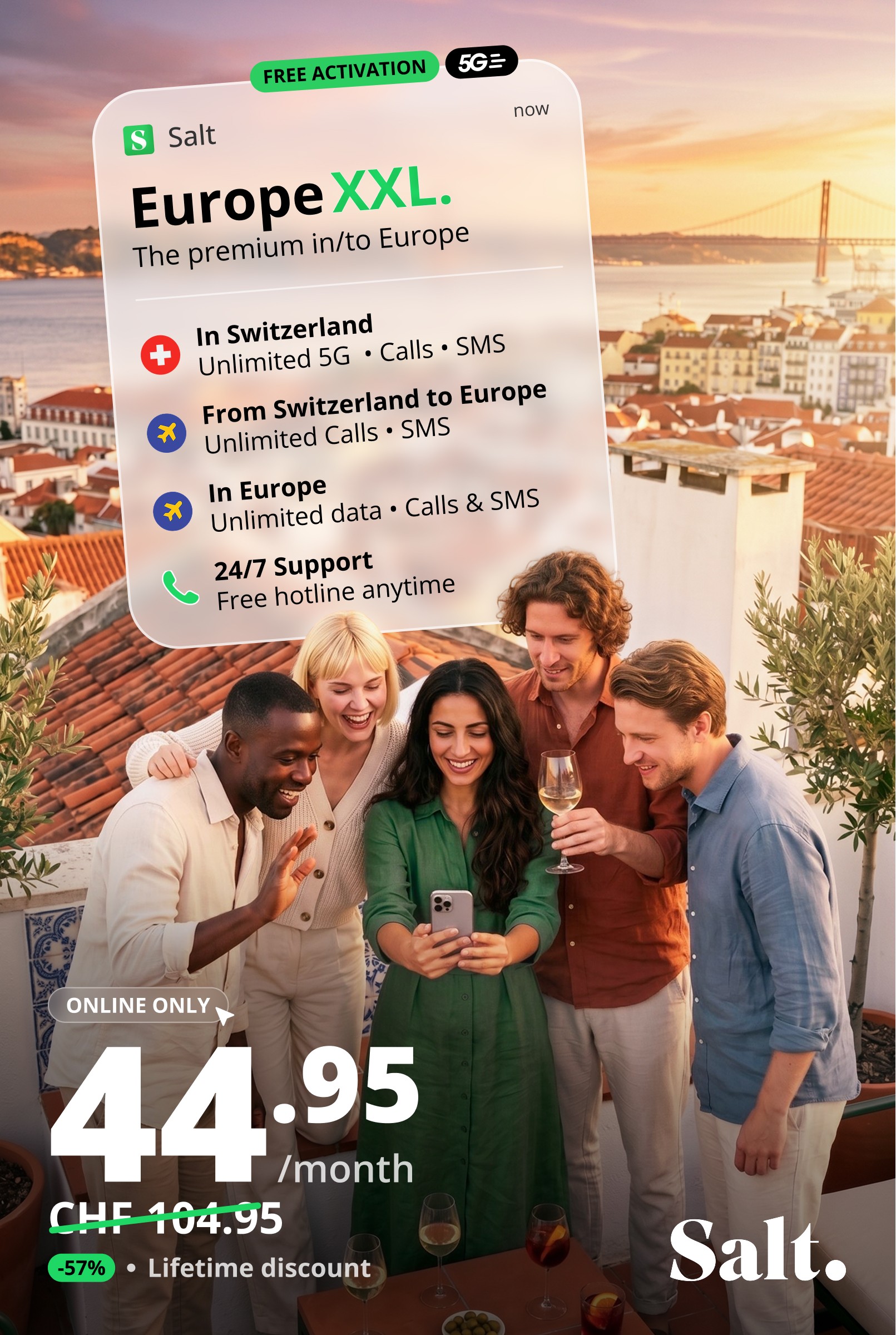
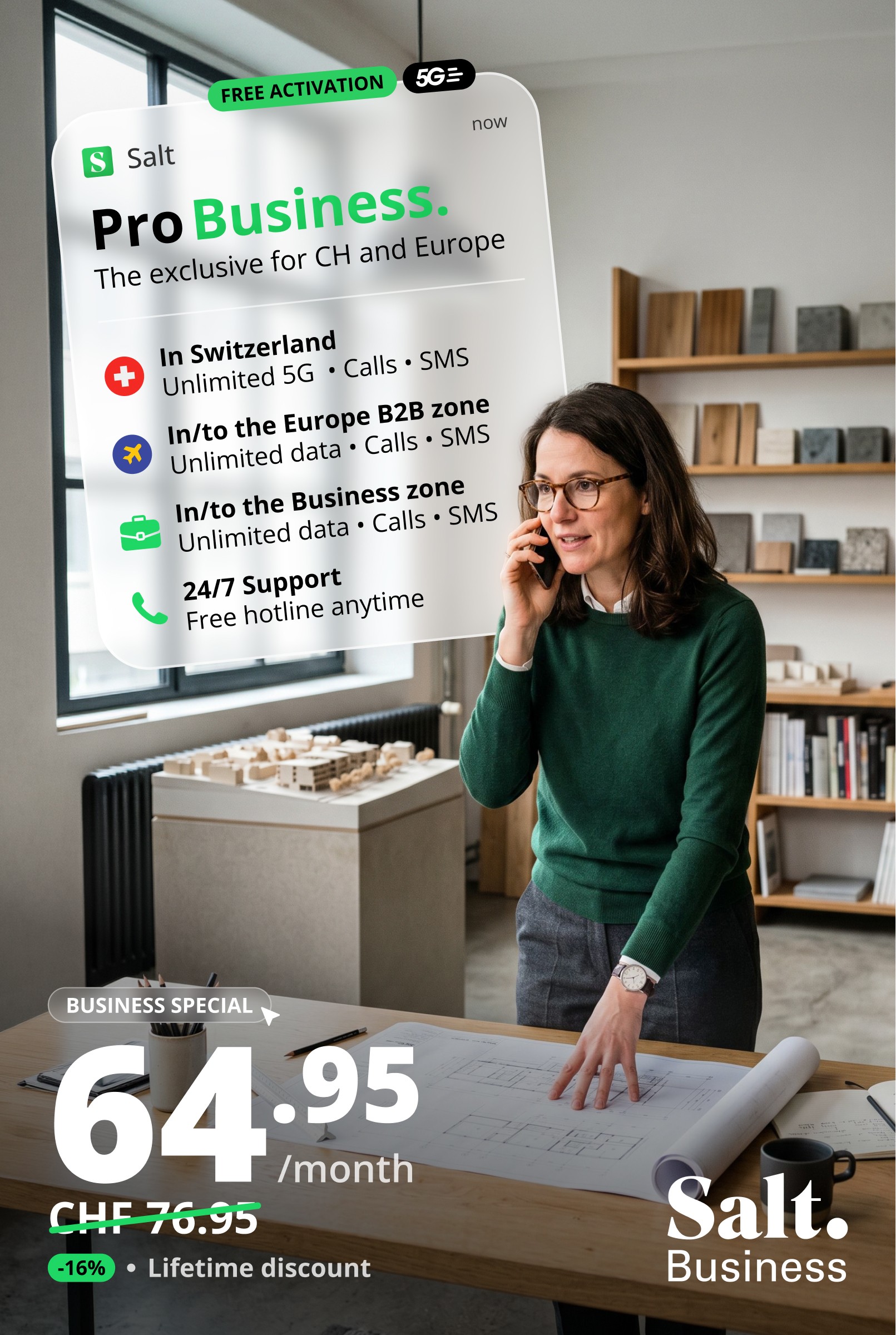
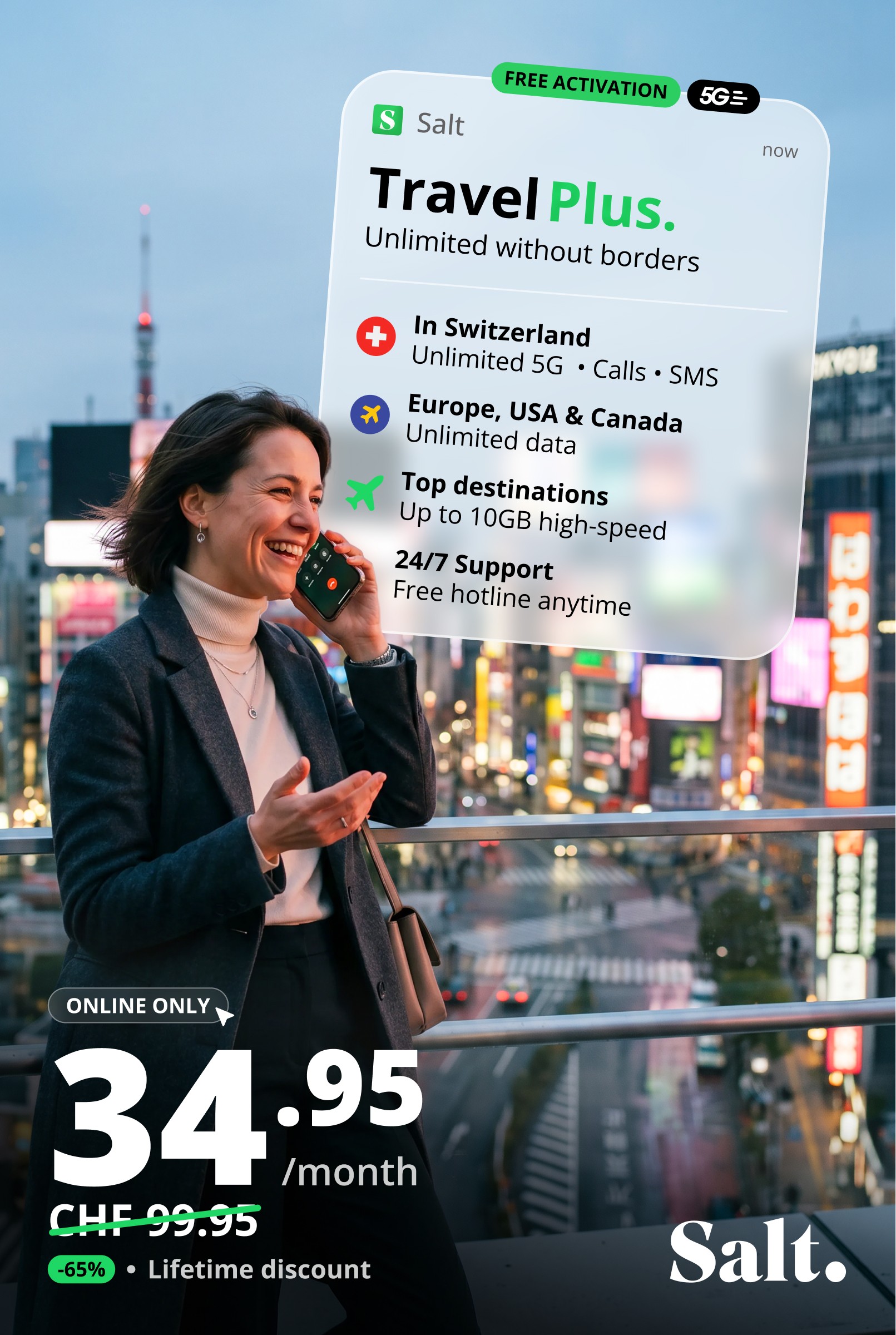
One language, every plan. From Swiss Max to Pro Business, same anatomy, different lives.
02
Extending the system
The real test:
invent what isn't there
A system isn't proven by redecorating what exists. It's proven when it can invent what doesn't. Same card anatomy, three plans Salt never had, each built from the system's own rules. When the language is right, the products almost design themselves.
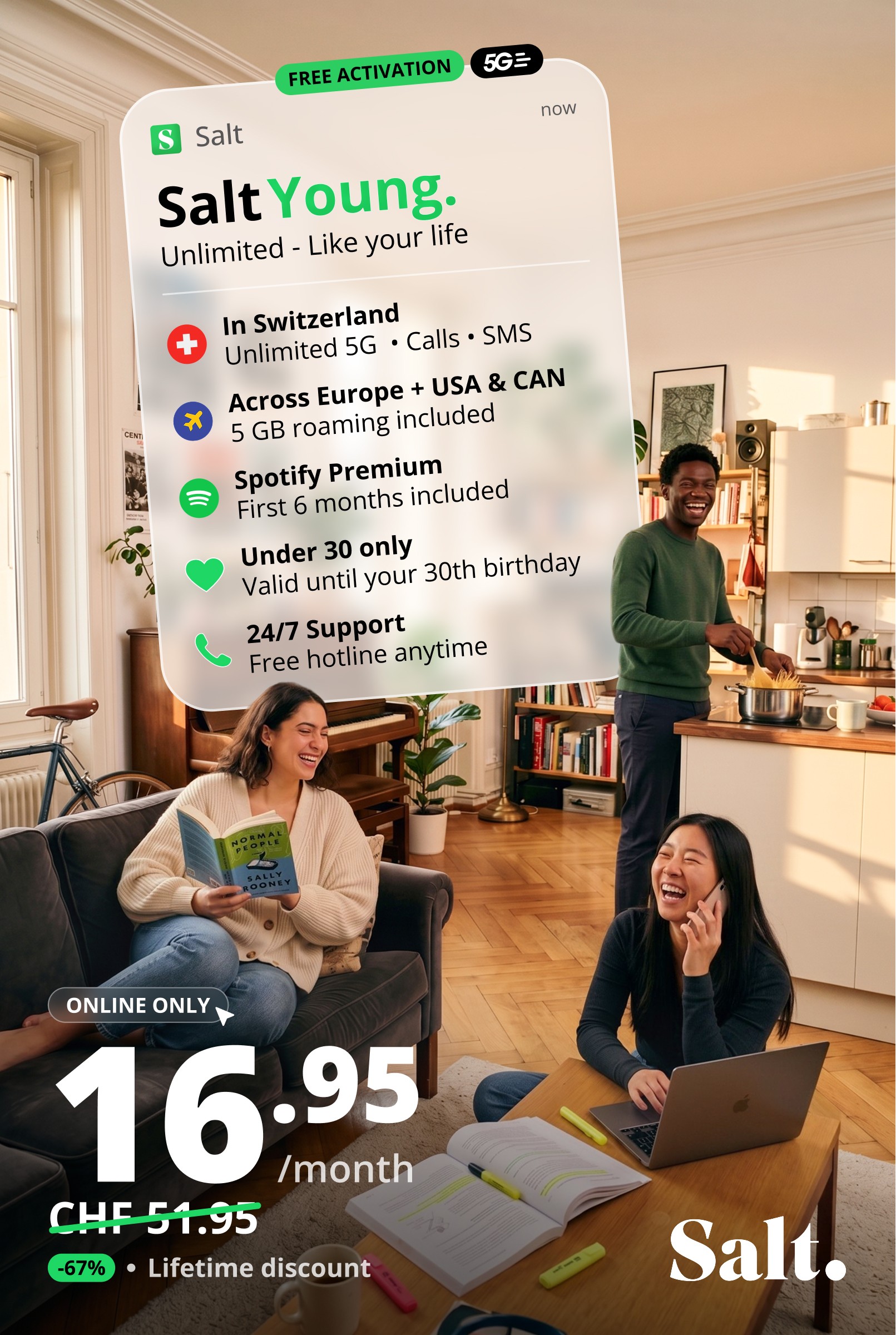
Salt Young. For the under-30s who don't read fine print. Salt had youth offers, but they were buried in promo bubbles and seasonal banners. The new plan is built like a student card. Clear, dated, expiring at thirty.

Salt Home+. Internet, TV, telephony without the bundle theatre. Most operators sell triple-play with three logos and three colors fighting for space. Salt Home+ is one card. Three services. One green dot. Calm.
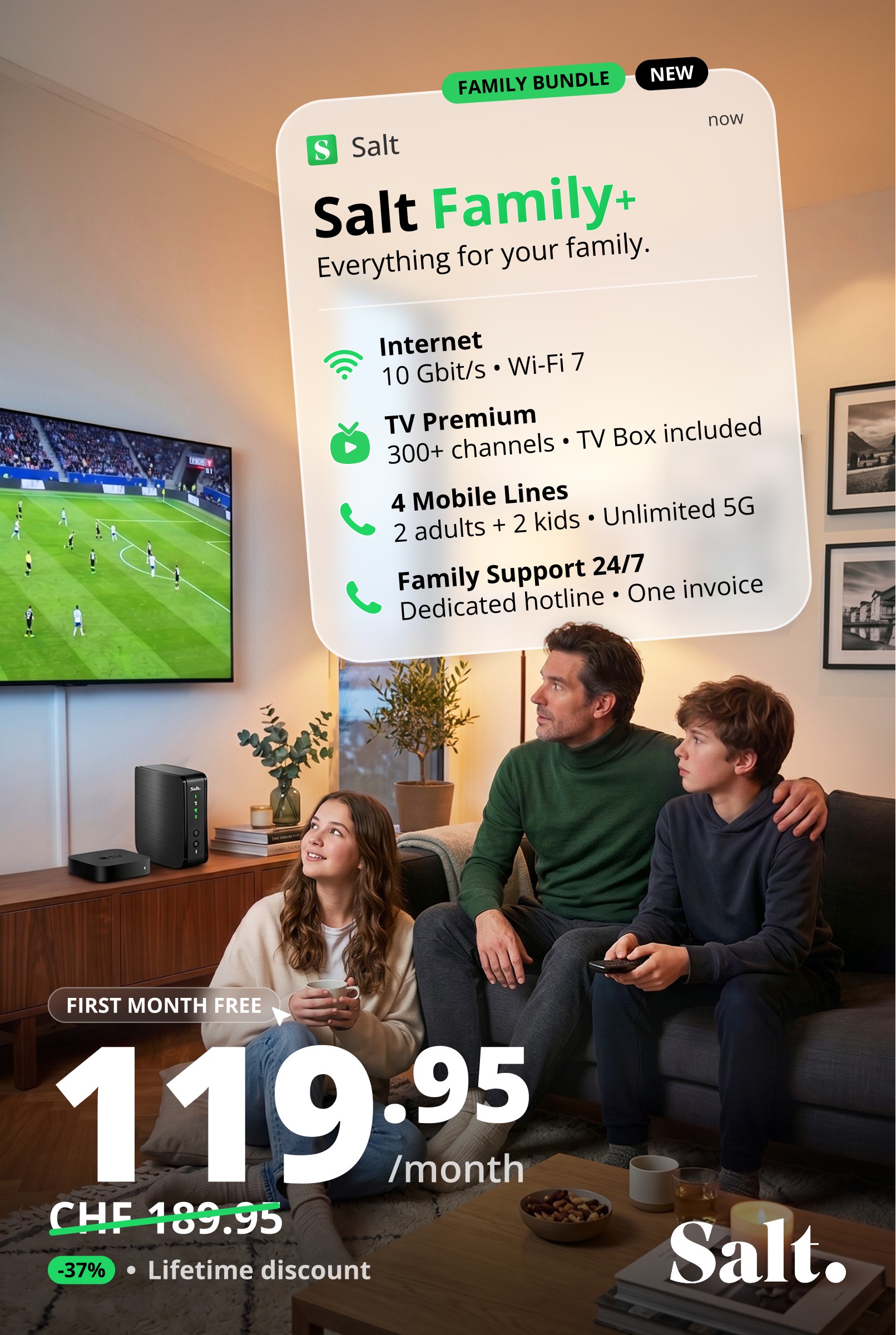
Salt Family+. One bill. Four lines. No favoritism. Family plans usually mean a main subscriber and three extras with smaller logos. Salt Family+ treats every line as equal. The card shows the family, not the hierarchy.
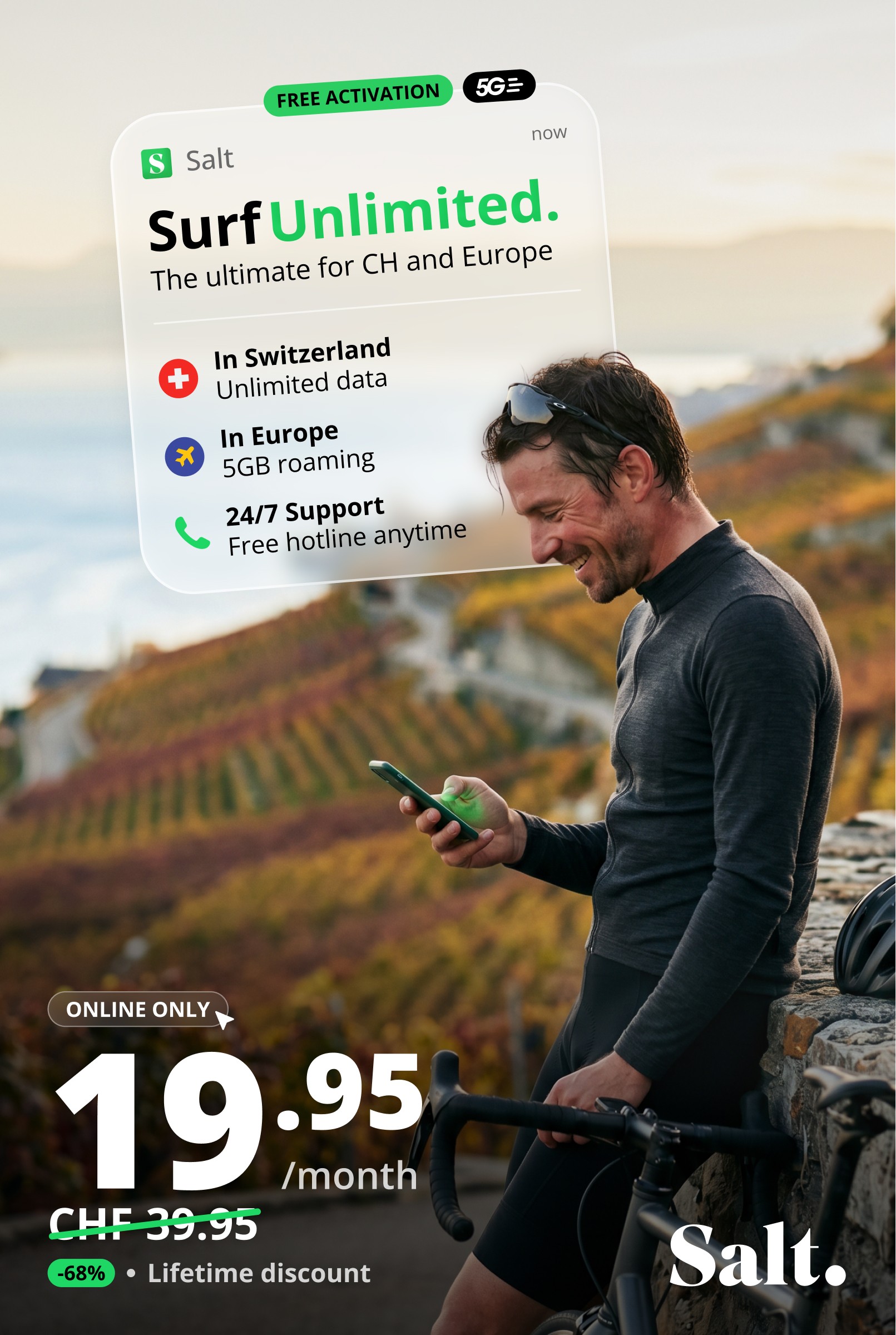
Five parts. Never moved.
1. Translucent panel, top third.
The plan's identity lives here: wordmark, tier, tagline, benefits. Always glass. Always floating.
2. Portrait, full bleed.
A single Swiss moment carries the card. No props, no illustrations, no UI clutter.
3. Price, lower-left. Large.
Quiet fact, not shouted. The crossed-out price is a single green stroke: lifetime discount, not a countdown.
4. Wordmark, lower-right.
Salt. always signs off, restrained, like a tailor's label.
5. One green accent.
One word, one stop, one percentage. Never more than 10% of surface area.
03
From noise to signal
Same offer. Less noise.
Set the new beside the old. Same plan, same price. Everything that disappears was just noise the offer never needed. Remove it, and the product speaks for itself.
The empty stage is gone.


WHY
The old offers floated on empty neon. The new ones land on real lives. Same brand energy, but lived now, not staged.
The shouting is gone.


WHY
"TOP NETWORK. TOP PRICE." are two claims competing for attention in the same breath. When everything is "top", nothing is. The new system trusts the product name to carry the meaning. Europe Data. tells you what it is and where it works without ever raising its voice.
The red strip is gone.
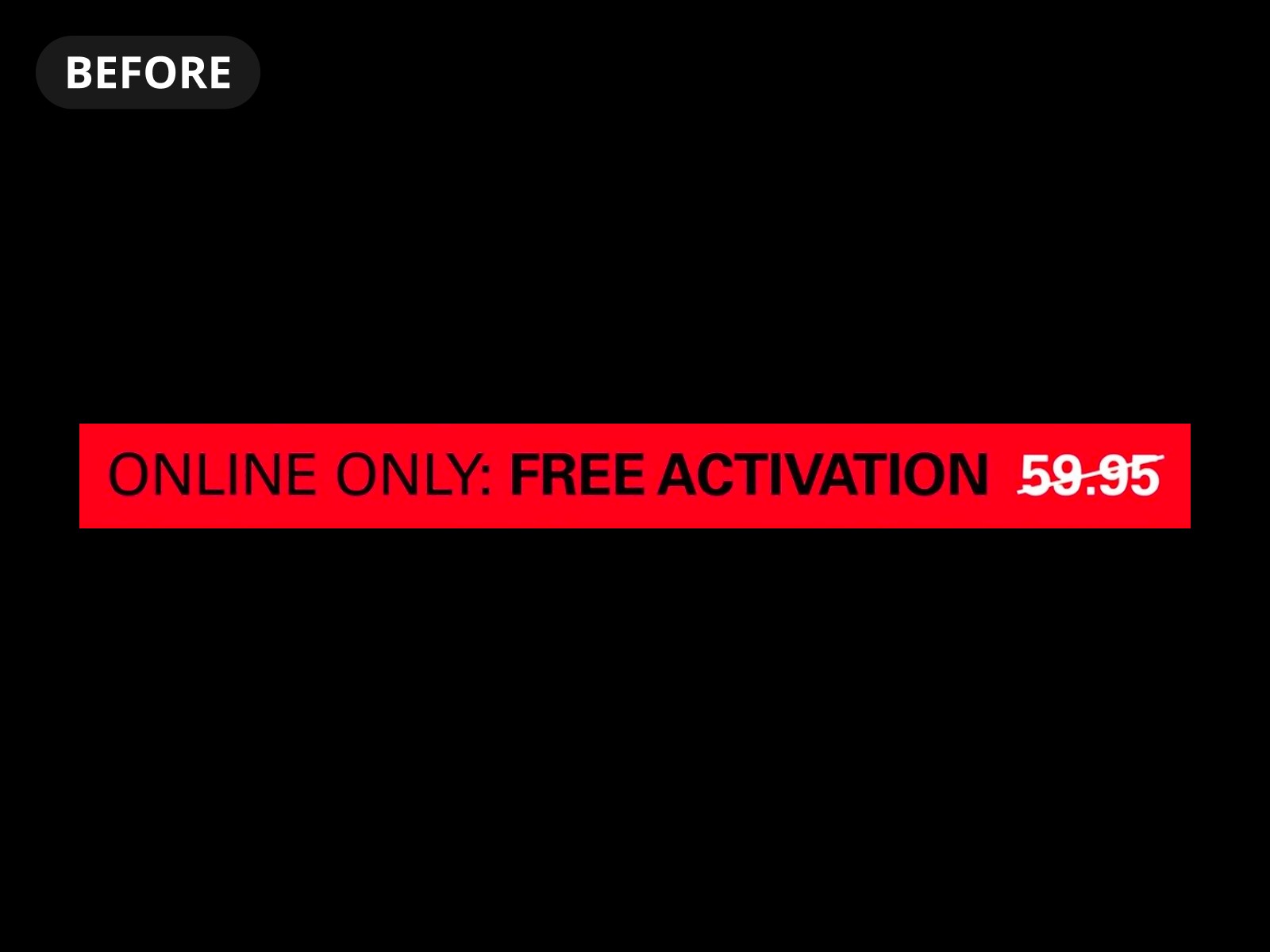
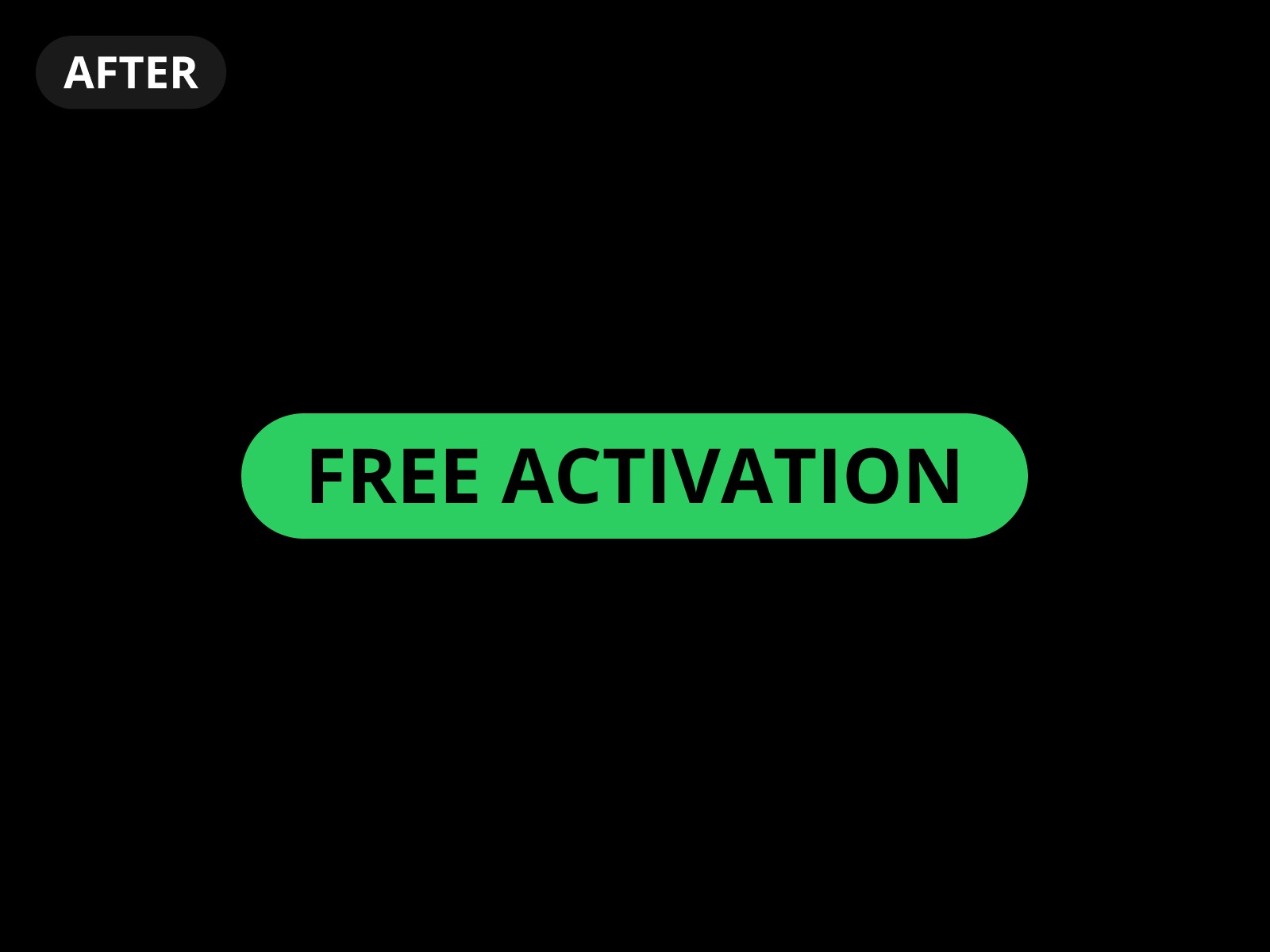
WHY
Red bars and capitalised urgency are the visual language of clearance sales. They create anxiety, not desire. The new pill keeps the same offer but reframes it as a benefit. Soft, green, lowercase intent. Not a countdown.
The price stops shouting.
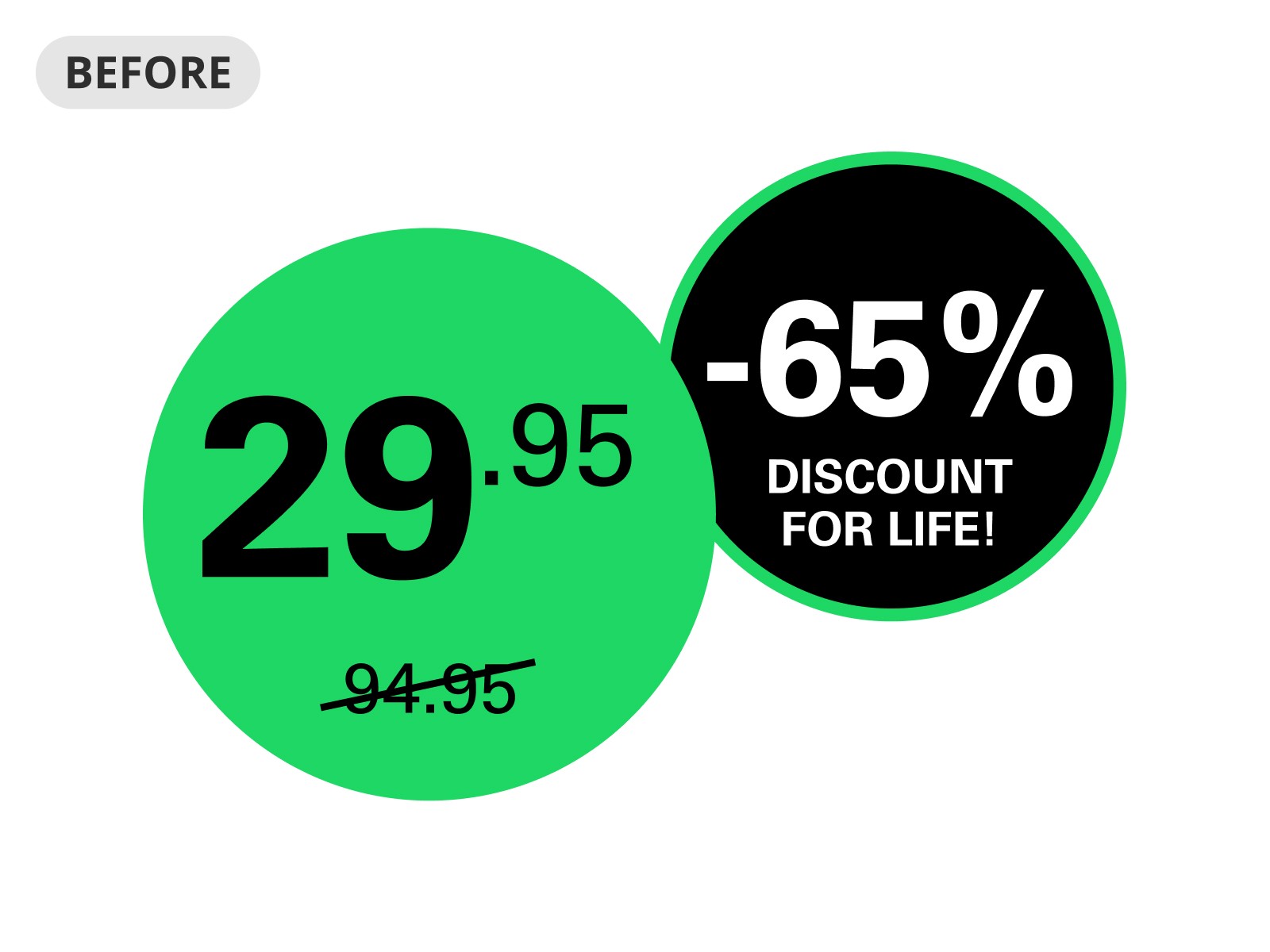

WHY
A price written inside a giant green disc, with a "-65%" badge floating beside it like a second sun, makes the product look discounted, not premium. The new typography lets the number breathe. It's still 29.95, but it now reads as a value, not as a clearance.
The poster becomes a notification.

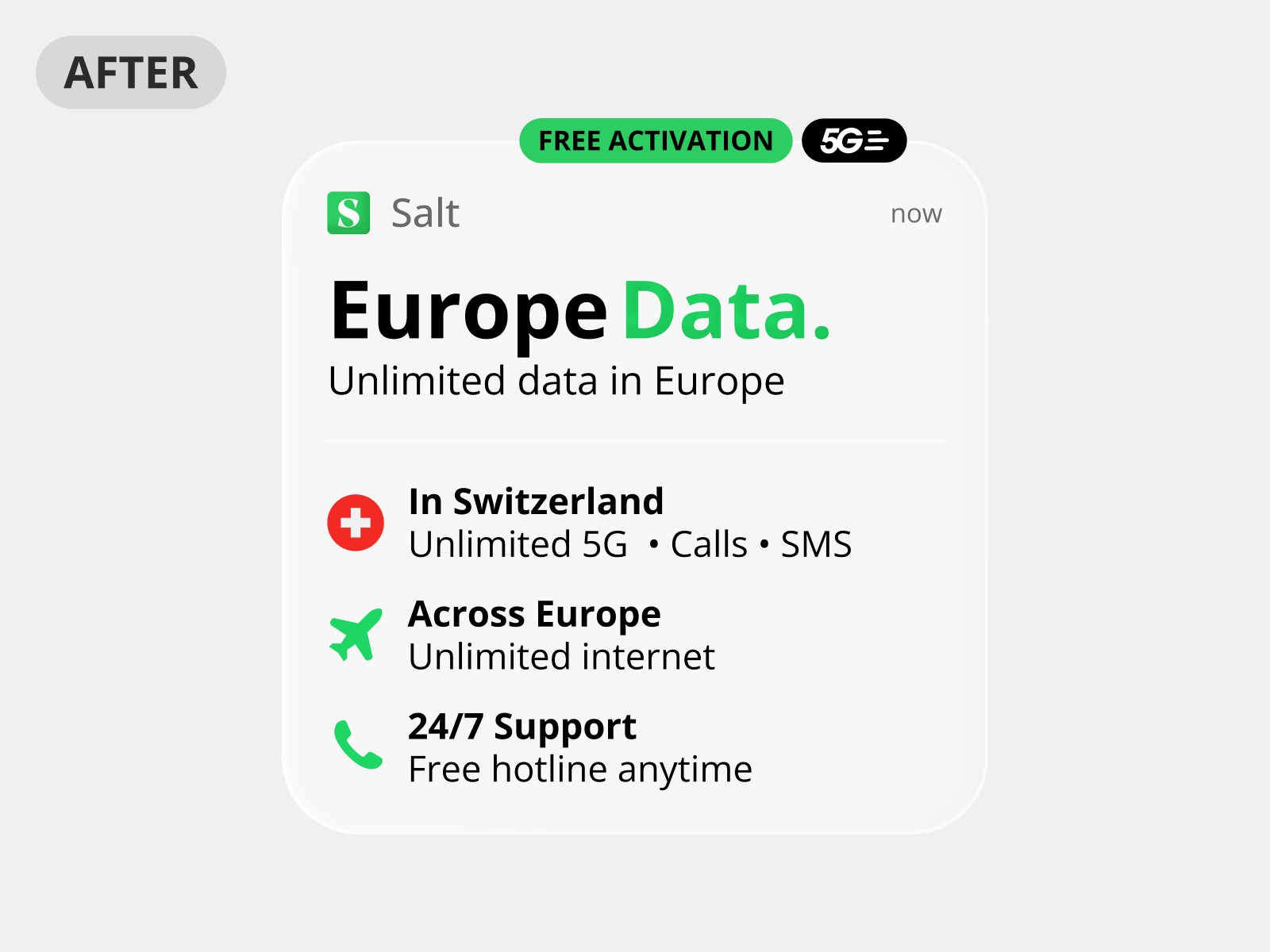
WHY
The old layout was built like a print poster from the 90s. Headline, claim, price, CTA, all fighting for the same square inch. The new system treats the offer as a notification. A discreet card that lands on top of life, gives you what you need, and leaves. The product becomes part of the moment, not an interruption of it.
The logo finds its place.
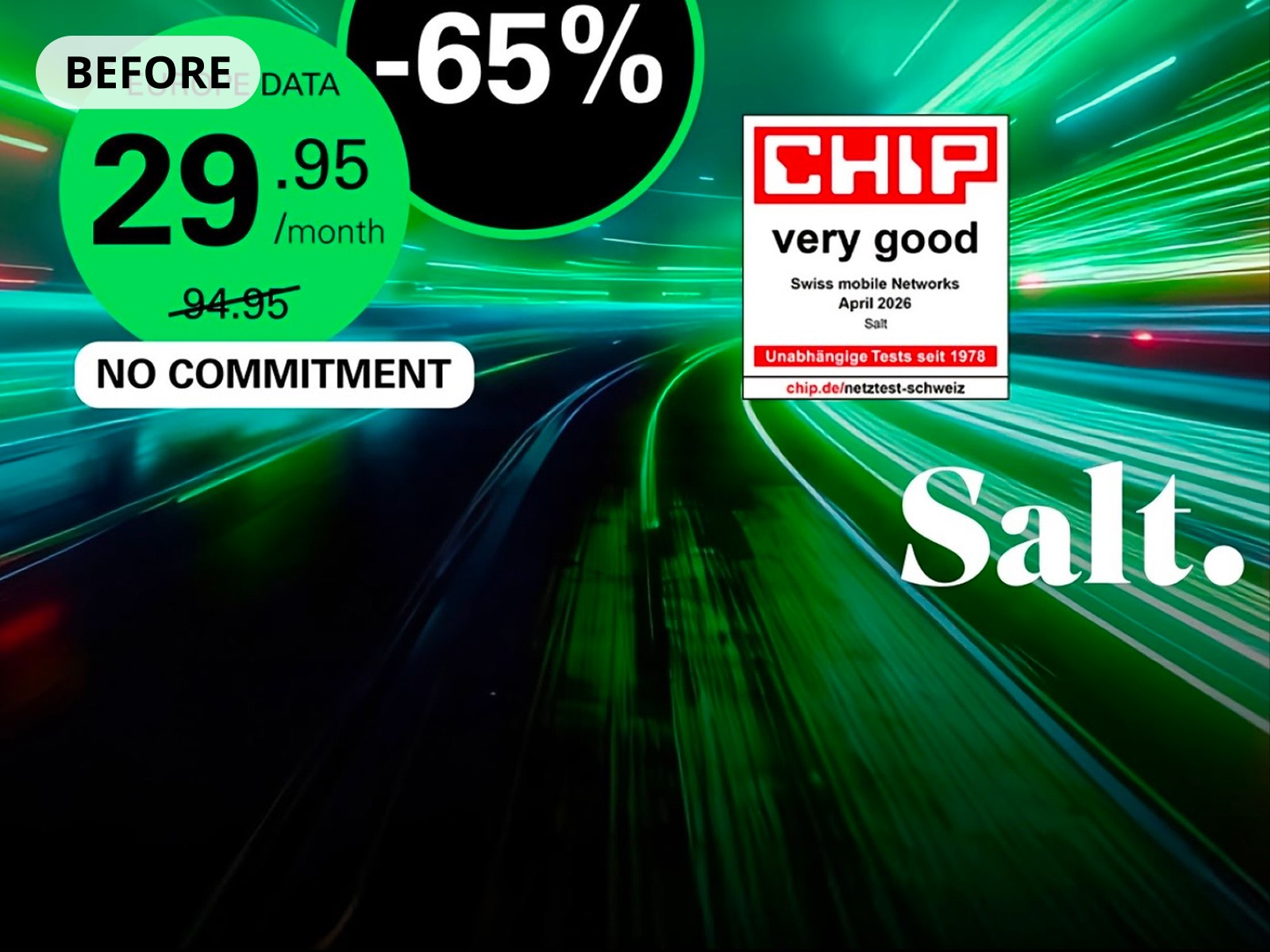

WHY
The old logo behaved like a copyright notice in the corner of a poster. The new one behaves like a sender's name on a message. The brand stops being a stamp at the end and becomes the voice at the start. Same logo, different relationship to the reader.